
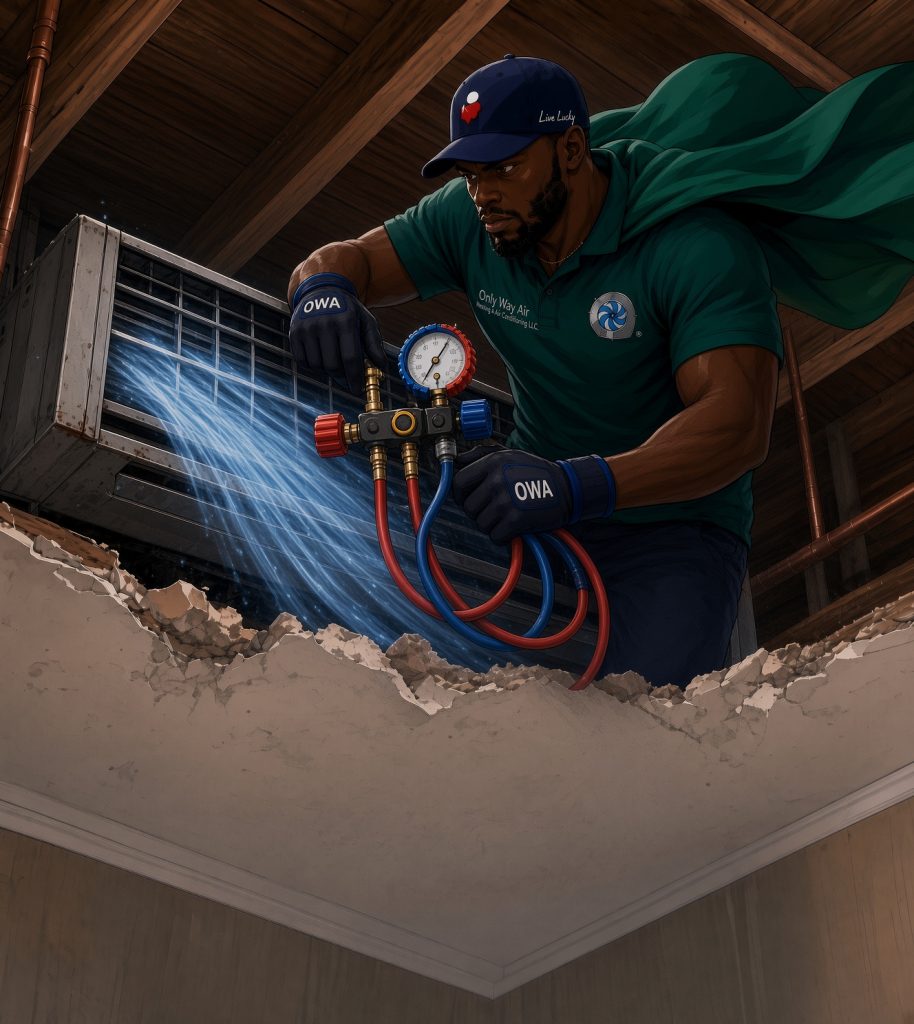
Water Around Indoor AC Unit
Posted on September 4, 2026 • By a1computers
← Back to HVAC Troubleshooting Guide
Water Around Indoor AC Unit — Causes, Risks & What to Do in DFW Homes
Water on the closet floor, under the air handler, or dripping through a ceiling is one of the most common cooling-season calls we take in Fort Worth, Dallas, Arlington, and the rest of DFW. In almost every case it is condensate — moisture the air conditioner pulled out of the air — that did not leave through the drain.
This is not a plumbing leak, and wiping the puddle does not fix it. A clogged drain, a frozen coil that later melts, a cracked pan, or a failed pump can soak insulation, drywall, and flooring. This page is the homeowner symptom guide. For hidden attic damage see The Silent Attic Water Leak. To request service see HVAC water leak repair.
Start With Where the Water Is Coming From
Clear water near the indoor unit during cooling is almost always condensate, ice melt, or a failed drain pan — not a supply-line leak.
Why an Air Conditioner Makes Water
Warm indoor air crosses the cold evaporator coil. Moisture condenses on the fins, drips into a pan, and should leave through a ¾-inch condensate line. On a humid DFW afternoon a typical system can pull several gallons of water out of the house in one day. When the drain, pan, or pump cannot keep up, that water ends up on the floor or in the attic.
Why This Happens So Often in DFW
- Long cooling seasons — drains have months to grow sludge.
- High indoor humidity — sticky homes produce more condensate. See Why Is My House So Humid?
- Attic air handlers — a clog soaks insulation first. Details in The Silent Attic Water Leak.
- Systems that never shut off — an AC that runs all day never gives the drain a rest.
- Dirty filters and weak airflow — the coil freezes, then the ice melts into a flood. See Why Is My AC Frozen Up?
Drain clearing, pan inspection, and float-switch testing are part of seasonal maintenance.
Where Homeowners Usually Find the Water
Puddle on the platform or water under the closet door. Check the pan, clean-out, and whether the unit recently froze.
Wet insulation or a musty smell before a stain shows downstairs. Do not walk wet insulation — call for service.
The leak has already left the pan. Brown rings or dripping can lights usually mean the drain has been backing up for days.
Often a thawing frozen coil, a full pan, or the secondary drain dumping because the primary line is blocked.
A drip at the PVC exit is normal in cooling season. Indoor water plus a dry termination usually means a clog.
Classic ice-melt pattern. Diagnose the freeze, not just the puddle.
Most Common Causes
Clogged condensate drain
The leading cause. Dust, biofilm, and algae plug the ¾-inch line. Water fills the pan and overflows. Professional clearing uses the clean-out and confirms flow — not a guess with household chemicals.
Frozen coil, then melt
Low airflow or low refrigerant ices the coil. When it thaws, the pan cannot hold the water. Common triggers: dirty filter, closed vents, weak blower, or a refrigerant leak.
Dirty indoor coil
Dust-matted fins act like a second dirty filter. The coil runs too cold, ice becomes more likely, and condensate does not shed cleanly.
Failed pan, pump, or float switch
Metal pans rust. Plastic pans crack. Pumps fail. If water is on the floor and the AC is still running, the overflow switch is missing, bypassed, or dead.
Warning Signs Before a Full Overflow
- Gurgling or dripping at the indoor unit while it cools
- The system shutting off, then running again after a “reset” (float switch cycling)
- Musty odor from the vents or closet
- Rust at the base of the air handler
- Ice or frost on the suction line
- No drip from the outdoor condensate pipe on a hot, humid day
- A ceiling stain that grows after long cooling cycles
What You Can Safely Check
If water is near electrical connections or the control board, turn the system off at the thermostat and the breaker before you look further.
Set the thermostat to OFF so the coil stops producing condensate.
A packed filter is the fastest homeowner step that prevents the next freeze.
If you see frost on the coil or suction line, leave the system off until it melts. Do not chip or pour hot water on the coil. Then read Why Is My AC Frozen Up?
Standing water, rust, or cracks mean call. Indoor water plus a dry outdoor termination usually means a clog.
Do not keep running the AC while water is spreading, pour bleach or drain cleaner into a line you cannot see, reset a tripped float switch over and over, or assume attic water is a roof leak until the air handler is checked.
How Only Way Air Diagnoses It
Overflow is a symptom. We find why the water left the designed path and confirm it will not come back the next hot afternoon.
1. Source and safety
Confirm it is HVAC condensate, check electrical exposure, and stop the system if it is still making water.
2. Pan and drain line
Inspect the primary and secondary pan, trap, and termination. Clear the line and verify actual flow.
3. Ice, airflow, and coil
Check filter, blower, and coil condition. A freeze that is not explained will flood the pan again.
4. Pump, switch, and next step
Test the pump and overflow switch. Then recommend the repair that matches the failure — not a one-size flush.
When to Call Instead of Waiting
- The leak returns after the filter is changed
- The coil keeps freezing
- The float switch keeps tripping
- Water is in the attic, ceiling, or electrical area — shut the unit down and use 24/7 Emergency HVAC
- Cooling is weak and the house stays humid
How to Keep It From Coming Back
- Check filters every 30–45 days in cooling season
- Have the drain, pan, and float switch included in seasonal maintenance
- Do not close supply vents in unused rooms — that reduces coil airflow and sets up freeze-and-flood
- Treat a sticky house as a system problem: Why Is My House So Humid?
- Do not ignore the first ceiling stain
Related Guides
HVAC Troubleshooting Guide
Main symptom index for cooling, airflow, heating, and water problems.
Why Is My AC Frozen Up?
Ice on the coil is a leading reason water suddenly appears around the indoor unit.
The Silent Attic Water Leak
Slow hidden damage when the air handler sits in the attic.
HVAC Water Leak Repair
Request same-day drain, pan, pump, or freeze diagnosis.
Frequently Asked Questions
Is water around my AC unit dangerous?
It can be. Standing water near electrical parts is a shock risk. Water in an attic or ceiling is a mold and structural risk. Shut the system down if water is spreading and call for service.
Can I run the AC if it is leaking?
Not if water is still coming out. Running it makes more condensate. A one-time dirty-filter issue may clear after the filter is changed and the drain is flowing. A repeating leak needs a technician.
Why did it leak after I turned the system off?
That is ice melt. The coil froze while it ran. When you turned it off, the ice became water faster than the pan could drain.
Could it be a roof leak instead?
It could, but attic water centered on the air handler during cooling season is condensate until proven otherwise. We see this mix-up constantly in DFW attics.
Will maintenance prevent it?
In most homes, yes. A clear drain, intact pan, working float switch, and regular filter changes prevent the majority of indoor-unit water calls. That is the point of seasonal maintenance.
“The Right Way Is The Only Way.”
TDLR-Certified Technicians • TACLB00103517E
Need the Water Stopped Today?
Only Way Air diagnoses and repairs indoor AC water leaks throughout Fort Worth, Dallas, Arlington, Mansfield, Burleson, Grand Prairie, and the greater DFW Metroplex. We clear drains, replace failed pans and pumps, find frozen-coil causes, and test the safety switch so the leak does not come back.
Proudly Serving Fort Worth, Dallas, Arlington & All of Tarrant County — helping homeowners stop indoor AC water leaks and protect the home around the system.